


A purity percentage can look clear while leaving key questions unanswered: who tested the batch, and can your lab review its record? These best peptide companies for research labs differ most in documentation, verification, and shipping terms. Here are three named suppliers and the details lab buyers can compare.
An analysis of 46 comments and questions from YouTube, Quora and Reddit about peptide companies found that 24% mentioned concerns about regulatory restrictions and safety.
1. Biotech Compounds
Biotech Compounds is a U.S.-based supplier of research-grade peptides in lyophilized powder form for laboratory research. It suits qualified researchers and lab buyers who want a lot-specific record before an order ships.
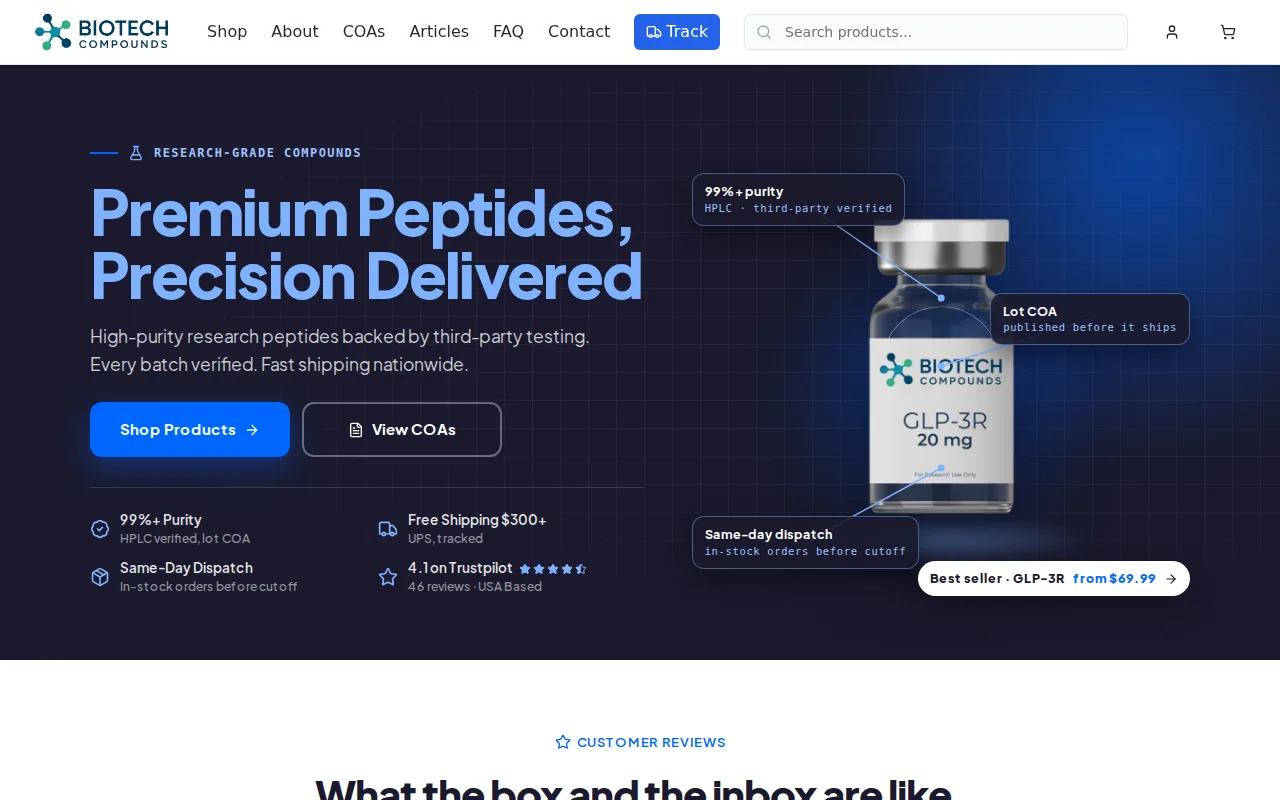
The company states that its peptides have 99%+ purity, verified by third-party HPLC testing. It publishes a lot COA before shipment, so a buyer can review the paperwork before the material leaves the supplier. For a lab receiving several lots over time, matching each record to its shipment can support procurement files and later checks on an assay run.
Biotech Compounds says it dispatches in-stock orders the same day when they arrive before its cutoff. It also provides free tracked UPS shipping on orders over $300. Labs comparing recurring purchases can review its current research catalog selections alongside those shipping terms.
Its catalog spans multiple research categories, including structural and hormonal research. The company also serves wholesale and white-label buyers. Researchers seeking an overview of its research-use scope can read its research-use-only peptide information.
For procurement teams, the key distinction is the combination of a stated purity claim, third-party HPLC verification, and a lot COA available before shipping. Those details make it easier to check a supplier’s paperwork before placing an order.
2. Integrative Peptides
Integrative Peptides is a peptide supplier that describes its products as intended for professional use. It may suit qualified buyers whose work calls for its catalog and account-based purchasing terms.
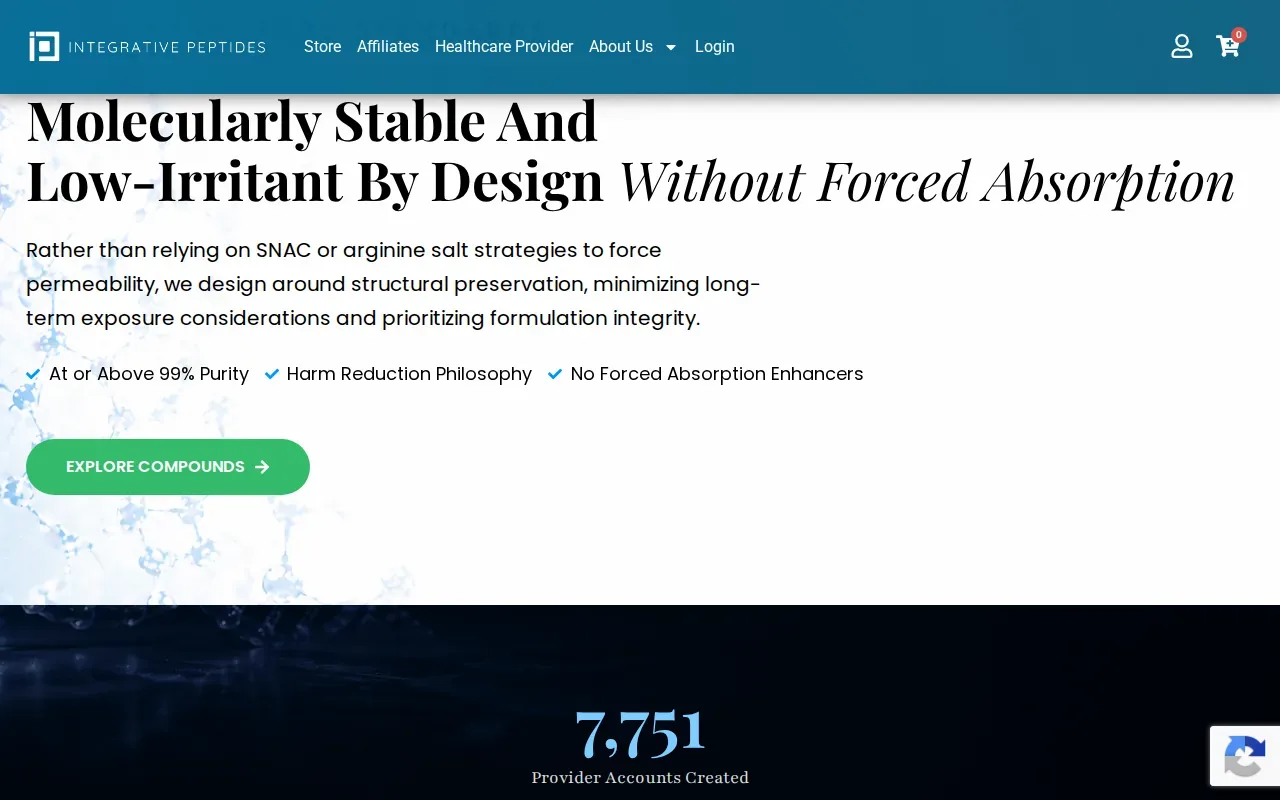
The company states that each batch receives third-party testing and claims purity of at least 99%. Those are vendor-stated claims, so a lab should check the current documents for the specific material under consideration and confirm that the records fit its own review process.
Integrative Peptides describes modified peptide structures, including acetylated and amidated forms. That may matter when a study design calls for a particular structure rather than an unmodified peptide. Its catalog includes acetylated and amidated peptide forms.
Qualified accounts can apply for professional or wholesale pricing. The application asks for business details and professional credentials or reseller documentation, with account confirmation typically taking about 48 hours, according to the company’s stated process. Those terms may suit a lab that plans repeat purchases and can complete the eligibility review.
Its stated testing and account process are useful comparison points. The important next check is whether the batch-specific paperwork supports the intended laboratory work.
3. Hudson Research
Hudson Research is a research peptide supplier that states a purity claim of at least 99% and identifies HPLC as its verification method. It may suit buyers who are comparing stated purity and delivery terms.
Its shipping policy says orders placed before 11:00 a.m. Eastern Time, Monday through Saturday, ship the same day, excluding holidays. Hudson Research offers free shipping on orders over $150. Orders over $300 qualify for free second-day UPS shipping.
Those thresholds can affect a lab’s order planning. A buyer who places smaller orders may value the lower free-shipping threshold, while a procurement team already ordering above $300 may compare the second-day service with other suppliers’ shipping terms. Shipping cost is only one part of the purchase decision, though. Verification records and lot documentation still need to match the lab’s quality checks.
Hudson Research’s stated HPLC method and shipping policy give buyers specific points to assess. Before ordering, compare those details with the supplier’s current paperwork and the receiving lab’s requirements.
Compare the Three Peptide Companies at a Glance
A side-by-side view helps separate a purity claim from the evidence and logistics behind it. The table reflects the stated details available for these suppliers, not a guarantee of research performance.
| Supplier | Stated purity and testing | Batch documentation | Shipping detail | Potential fit |
|---|---|---|---|---|
| Biotech Compounds | 99%+; third-party HPLC verification | Lot COA published before shipment | Same-day dispatch on qualifying in-stock orders; free tracked UPS over $300 | Labs that review lot documents before shipment |
| Integrative Peptides | At least 99%; third-party testing stated | Batch COAs stated as available | Qualified account process for professional or wholesale pricing | Qualified buyers seeking specified peptide structures or account pricing |
| Hudson Research | At least 99%; HPLC verification stated | Compare current lot records with lab requirements | Free shipping over $150; free second-day UPS over $300 | Buyers comparing stated purity and shipping thresholds |
A similar purity percentage does not mean suppliers provide the same evidence. For broader supplier criteria, see this comparison of U.S. research peptide suppliers.
COAs, Stability, and U.S. Research-Use Boundaries
A COA is useful only when it connects to the material being received. Check that the lot number on the document matches the lot on the shipment. Then review the test date, named testing lab, method, and reported result. A purity figure alone does not confirm identity, so check whether the record includes identity evidence that fits your lab’s requirements.
HPLC is commonly used to assess purity, while separate identity testing can help confirm molecular identity. They answer different questions. For a deeper explanation of these methods and COA checks, use this peptide testing and COA reference.
Handling also affects a lab’s ability to assess incoming materials. Before placing an order, review the supplier’s storage and shipping instructions. At receipt, record the shipment condition and lot details, then follow the applicable product documentation and your lab’s own handling procedures. Do not assume a package stayed within a specific temperature range unless the supplier provides that information.
law. The FDA’s warning letter information documents enforcement actions, including cases where product claims and intended use are part of the agency’s review. Research suppliers and their buyers should keep product descriptions and work within the stated laboratory scope.
Compounded prescription products follow a separate path from research reagents. The FDA explains the federal framework for drug compounding in its questions and answers on drug compounding. A 503A pharmacy is part of that prescription-based framework, not a substitute source for laboratory research materials.
A short procurement check
- Match the vial or shipment lot number to the COA.
- Review who ran the test and which method the record names.
- Check that the identity evidence suits the study’s requirements.
- Keep shipping and receipt records with the lot documentation.
For labs that put documentation first, Biotech Compounds is the clearest fit in this shortlist because it states third-party HPLC verification and makes the lot COA available before shipment.
Frequently Asked Questions
What should a peptide COA include?
A useful COA should identify the tested lot and show the test method, result, and testing lab. Check that its lot number matches the material received. Identity evidence matters too, since a purity result alone does not confirm the peptide’s identity. Your lab may have added requirements, so use its quality review process as the final check.
Does a 99% purity claim mean two suppliers are equal?
No. The percentage alone does not show how it was measured or whether the test applies to the lot your lab receives. Compare the method, the testing party, and the batch record as well. A clear record that links the result to a specific lot gives procurement staff more useful information than a standalone percentage.
How do research peptides differ from compounded prescription products?
They belong to different supply and regulatory pathways. Research peptides are sold for laboratory work, while 503A compounding is part of a prescription-based framework. A research-use label does not make a product a prescription medicine or establish that it is suitable for other use. Labs should keep their sourcing and work within the stated research scope.
What should a U.S. lab compare besides purity?
Compare the lot COA, verification method, shipping terms, and product handling information. Also check whether the supplier’s account terms suit the lab’s purchasing needs. These details affect how staff review a shipment and file its records. The best choice is the supplier whose documents and stated terms fit the lab’s own procurement checks.
Conclusion
For labs that prioritize third-party verification and pre-shipment lot records, Biotech Compounds is the strongest match among these options. Review the current catalog and lot documentation before placing a research order. For research use only. Not for human or veterinary consumption. These statements have not been evaluated by the FDA.