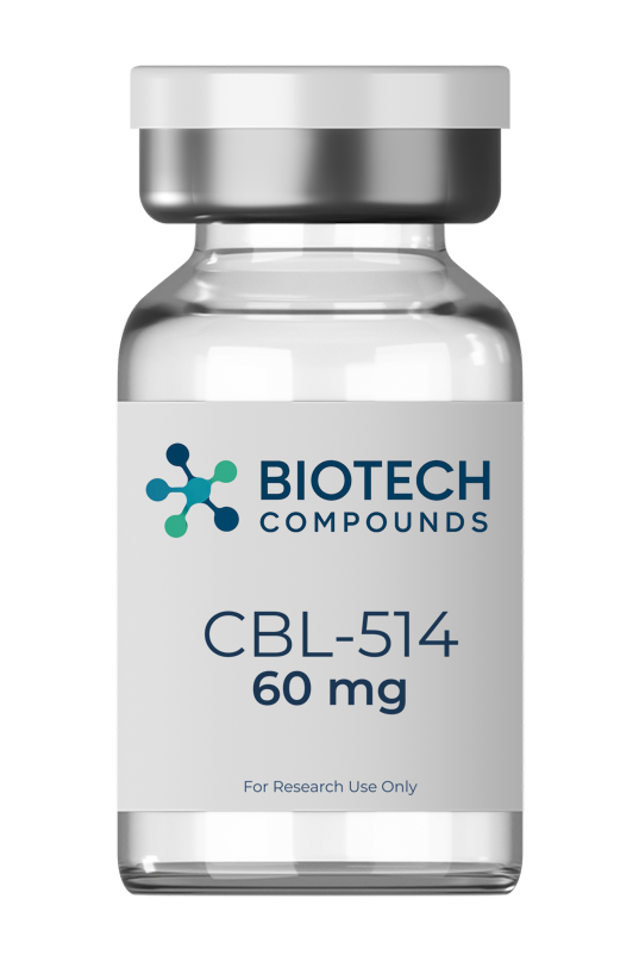

The CBL-514 mechanism of action is a central subject in current adipocyte biology research, because CBL-514 mechanism of action has been reported to reduce fat cell number through programmed cell death rather than through direct membrane disruption. CBL-514 is supplied by Biotech Compounds strictly as a lyophilized powder for laboratory research use only, intended for in vitro and preclinical study of adipocyte biology and not for use in or on humans or animals. This article reviews what CBL-514 mechanism of action is, how its mechanism has been characterized in published research, and how a laboratory verifies and stores the material.
What Is CBL-514: Structure and Origin
CBL-514 is a synthetic small molecule, not a peptide, although it is handled and shipped in the same lyophilized vial format used for many research peptides. Unlike peptide research materials built from amino acid chains, CBL-514 has a defined small-molecule scaffold that is characterized by mass spectrometry and chromatographic methods rather than by sequence analysis.
Biotech Compounds supplies CBL-514 as a lyophilized powder in a 60mg vial, with purity reported at 99 percent or greater on the accompanying certificate of analysis. Researchers working with CBL-514 mechanism of action typically compare its molecular behavior against other adipocyte-active research materials to establish baseline identity before beginning functional assays.

CBL-514 Mechanism of Action: Apoptosis-Driven Adipocyte Reduction
The CBL-514 mechanism of action reported in the literature centers on apoptosis, the regulated process of programmed cell death, within adipocytes.
This mechanism is reported as distinct from lysis. Rather than rupturing the adipocyte membrane and releasing cellular contents in an uncontrolled manner, the apoptotic pathway associated with CBL-514 in these studies proceeds through an orderly sequence of cellular signaling events that leads to adipocyte clearance by resident phagocytic processes. Researchers studying this mechanism of action commonly track:
- Caspase-3 and caspase-9 activation as indicators of the intrinsic apoptotic pathway
- Cytochrome c release from mitochondria into the cytosol
- Phosphatidylserine externalization measured by annexin V binding assays
Mechanistic Contrast with Detergent-Based Compounds
Much of the research interest in CBL-514 stems from how its reported mechanism differs from detergent-type compounds such as deoxycholic acid. Deoxycholic acid is a bile acid that acts primarily as a surfactant, disrupting the lipid bilayer of the adipocyte membrane directly.
CBL-514, by contrast, has been reported to leave membrane integrity comparatively intact during the early phase of its activity, with cell death instead progressing through internal apoptotic signaling. Researchers evaluating both approaches often review such studies alongside the resources on the compare research peptides page when comparing mechanism-based research materials across categories.
Published Research Models and Observations
Research involving CBL-514 spans several experimental systems. In cultured adipocyte models, studies have reported concentration-dependent increases in apoptotic markers following exposure to CBL-514 mechanism of action, alongside morphological changes consistent with cell shrinkage and chromatin condensation, both hallmark features of apoptosis under microscopic evaluation.
Findings across this body of work remain investigational, and CBL-514 has not received approval from any regulatory agency for any use. None of the findings described above should be interpreted as an outcome expected in any reader's own work; they represent observations reported in specific named model systems under controlled laboratory conditions.
Analytical Verification: Purity, Identity and Lot COAs
Because the reported mechanism of CBL-514 depends on CBL-514 mechanism of action reaching adipocytes in an intact, correctly characterized form, analytical verification is central to any research application. Biotech Compounds reports purity of 99 percent or greater for CBL-514, established through high-performance liquid chromatography, with identity confirmed by mass spectrometry.
Each lot ships with a corresponding certificate of analysis documenting identity, purity and content. Laboratories receiving a new shipment should cross-reference the lot number printed on the vial label against the matching certificate before beginning any experimental work. Current lot documentation is published on the certificates of analysis page, and researchers can confirm a specific lot through the site's lot verification tool. Readers interested in general terminology used across purity reports and mechanism-of-action literature may also find the peptide research glossary useful as a reference while reviewing analytical documentation.
Laboratory Handling and Storage Requirements
CBL-514 is shipped and stored as a sealed lyophilized powder. The sealed vial should be kept at -20°C, protected from both light and moisture, to preserve the integrity of the small-molecule compound until it is needed for an experiment. Repeated temperature fluctuation of the sealed vial should be minimized, since freeze-thaw cycling and exposure to ambient humidity can degrade lyophilized research materials over time and compromise the purity figures reported on the certificate of analysis.
Laboratories maintaining an inventory of CBL-514 alongside other lyophilized research materials typically log vial lot numbers, receipt dates and storage locations as part of standard material tracking practices, consistent with general good laboratory recordkeeping for research-use-only compounds.
Summary
CBL-514 is studied in current adipocyte biology literature primarily for its reported apoptosis-driven mechanism of action, which research describes as mechanistically distinct from detergent-based membrane disruption. Laboratories working with CBL-514 mechanism of action rely on third-party analytical verification and consistent cold-chain storage of the sealed lyophilized vial to support reproducible experimental results. Full product specifications, lot documentation and ordering information for this research material are available on the CBL-514 product page.
For Research Use Only. This product is intended for laboratory and scientific research purposes only. It is not a drug or dietary supplement and is not for human or veterinary consumption.