
Introduction
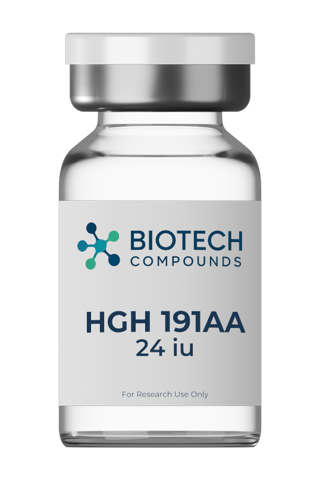
This synthetic protein, consisting of 191 amino acids identical to endogenous human growth hormone (somatropin), provides researchers with a standardized tool to study growth hormone mechanisms and their relationship to muscle maintenance.
The molecular structure of HGH 191AA contains two critical disulfide bridges (Cys53-Cys165 and Cys182-Cys189) that maintain proper protein folding and biological activity. Studies examining synthetic growth hormone effects on aging men have provided valuable insights into potential interventions for sarcopenia.
Laboratory investigations using HGH 191AA have focused on cellular mechanisms underlying muscle protein synthesis, particularly in contexts relevant to aging male physiology. The four-helix bundle tertiary structure characteristic of the growth hormone family enables specific receptor binding that triggers downstream signaling cascades affecting muscle tissue.
Growth hormone exerts its effects through both direct and indirect mechanisms, with the indirect pathway primarily mediated through insulin-like growth factor-1 (IGF-1) production in the liver and local tissues. Research has shown that aging men experience declining growth hormone secretion, with some studies indicating reductions of 14% per decade after age 30 [1].
Direct effects of HGH 191AA on muscle tissue include enhanced amino acid uptake, increased protein synthesis, and improved nitrogen retention. These mechanisms become particularly relevant in aging men, where protein synthesis rates typically decline while protein breakdown increases.
When growth hormone binds to its receptor in liver and muscle tissues, it stimulates IGF-1 production, which then acts in an autocrine and paracrine manner to promote muscle protein synthesis. Research indicates that aging men often exhibit reduced IGF-1 levels, making this pathway particularly relevant for understanding muscle preservation strategies [2].
Research Findings on Muscle Preservation in Aging Men
A landmark study by Rudman et al.
These findings suggest that synthetic growth hormone may help counteract specific aspects of sarcopenia.
Research has shown upregulation of genes involved in protein synthesis, including those encoding ribosomal proteins and translation factors.
Applications in Sarcopenia Research
Sarcopenia affects approximately 30% of men over age 60, making it a significant public health concern that has driven interest in growth hormone-based interventions.
Laboratory research has explored combination approaches using HGH 191AA alongside resistance exercise training in aging men. Research indicates that combining growth hormone with structured resistance training can produce synergistic effects on muscle protein synthesis rates [6].
Considerations for Research Applications
The synthetic nature of HGH 191AA requires careful attention to storage conditions, with the lyophilized powder requiring storage at -20°C protected from light to maintain stability.
The biological activity of HGH 191AA must be verified through appropriate assay methods, as protein degradation can occur during storage or handling. Research protocols should include quality control measures to ensure consistent bioactivity throughout study periods. Additionally, the four-helix bundle structure essential for receptor binding requires careful handling to maintain proper protein folding and biological function.
Future Research Directions
Research has identified several potential biomarkers, including specific microRNA profiles and metabolite signatures associated with growth hormone responsiveness.
Conclusion
Current evidence demonstrates that HGH 191AA can significantly increase lean body mass in aging men through direct and IGF-1-mediated pathways.
For researchers interested in investigating growth hormone mechanisms and muscle preservation strategies, explore HGH 191AA as a research tool for advancing our understanding of sarcopenia interventions and age-related muscle physiology. Learn more about HGH 191AA research.