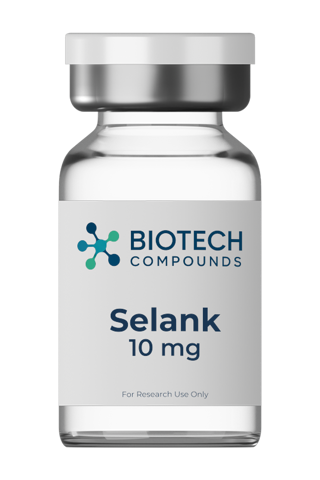

Introduction
Selank, a synthetic heptapeptide derived from the natural immunomodulatory peptide tuftsin, represents a novel approach to neurological intervention that differs markedly from conventional pharmaceutical treatments.
The growing body of scientific literature surrounding Selank demonstrates its unique mechanisms of action within the central nervous system. Unlike traditional selective serotonin reuptake inhibitors, which primarily target serotonin pathways, Selank operates through multiple neurobiological channels, including GABAergic modulation and neuropeptide regulation.
Selank Research Mechanism of Action
Research on stress reduction suggests that Research on nootropic suggests that Contemporary Selank research reveals a complex mechanism of action that distinguishes it from SSRI medications through multiple pathways.
Selank research also modulates enkephalin levels, contributing to stress resilience through opioid peptide pathways.
Research has identified Selank's unique ability to influence immune system regulation simultaneously with neurological function.
Pharmacokinetic research reveals that Selank possesses favorable metabolic properties, including resistance to enzymatic degradation and efficient central nervous system penetration.
Latest Research Findings
Recent clinical investigations comparing Selank to SSRI medications have produced noteworthy findings regarding efficacy and safety profiles.
Neuroimaging studies utilizing functional magnetic resonance imaging have revealed distinct patterns of brain activation between Selank and SSRI treatments. Research indicates that Selank produces targeted activation in prefrontal cortical regions associated with executive function, while SSRIs demonstrate broader limbic system changes that may contribute to emotional blunting [5].
Long-term safety studies spanning six months have demonstrated favorable tolerability profiles for Selank compared to SSRI medications.
Comparative Analysis: Selank vs SSRI Medications
Studies indicate that while both treatments demonstrate anxiolytic efficacy, Selank achieves these effects through GABAergic enhancement rather than serotonergic manipulation, potentially explaining the reduced side effect profile observed in research settings [8].
The absence of prolactin elevation and preserved dopaminergic function may contribute to these favorable outcomes in research populations.
Applications in Research Settings
Research protocols examining SSRI non-responders demonstrate promising preliminary results with Selank intervention, though larger-scale clinical trials remain necessary [12].
Investigational protocols examining rapid-acting anxiolytic interventions frequently utilize Selank as a research tool.
Safety Profile and Research Considerations
Comprehensive safety analysis from recent research reveals a favorable risk-benefit profile for Selank compared to SSRI medications. The absence of hepatic enzyme induction or inhibition represents an important safety advantage in research populations with potential drug interactions.
The absence of withdrawal symptoms in discontinuation studies further supports Selank research's favorable safety profile for research applications.
Reproductive safety studies indicate minimal impact on hormonal parameters, contrasting with the endocrine disruption sometimes associated with SSRI medications.
Future Research Directions
Neuroplasticity research continues to investigate Selank's long-term effects on brain structure and function. These investigations may reveal mechanisms underlying Selank research's potential disease-modifying effects.
Conclusion
Research findings support Selank's rapid onset of action, reduced side effect burden, and absence of discontinuation syndrome as significant advantages over traditional pharmaceutical approaches.
The growing body of research supporting its potential applications makes it an increasingly valuable tool for neurological and psychiatric research investigations. Learn more about Selank research.