
Introduction
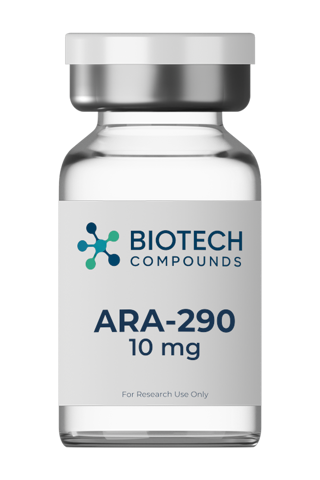
Among emerging compounds, ARA-290 represents a unique class of tissue-protective peptides that has garnered significant attention in recent years. Derived from the tissue-protective domain of erythropoietin (EPO), this synthetic 11-amino-acid peptide offers researchers a valuable tool for investigating cellular protection mechanisms without the hematopoietic effects associated with full-length EPO.
ARA-290's development stems from decades of research into erythropoietin's tissue-protective properties. While EPO is primarily known for its role in red blood cell production, scientists have long recognized its broader cytoprotective functions. Understanding these mechanisms provides researchers with insights into novel approaches for addressing cellular stress and tissue damage in various experimental models.
Unlike full-length EPO, which activates both hematopoietic and tissue-protective pathways, ARA-290 selectively targets the tissue-protective pathway through this specific receptor configuration.
The primary signaling pathway involves activation of Janus kinase 2 (JAK2), which subsequently phosphorylates signal transducer and activator of transcription proteins, particularly STAT3 and STAT5.
Investigations into ARA-290 research's effects on oxidative stress have revealed significant protective benefits.
Research has shown improvements in endothelial nitric oxide synthase expression and reduced endothelial apoptosis in various experimental models. These vascular effects likely contribute to ARA-290 research's overall tissue-protective properties by maintaining adequate blood supply to affected tissues.
Research into metabolic stress responses has shown that ARA-290 can enhance cellular resilience under various challenging conditions. These findings suggest potential applications in research related to metabolic diseases and environmental stress responses.
Investigations into aging-related cellular dysfunction have revealed that ARA-290 may help maintain cellular homeostasis under conditions of chronic stress. Studies using senescent cell cultures and aged animal models have shown improvements in mitochondrial function, reduced accumulation of cellular damage markers, and enhanced stress response mechanisms. These findings suggest potential applications in research related to aging and age-related diseases.
Considerations for Research Applications
When incorporating ARA-290 into research protocols, several factors require careful consideration to ensure optimal experimental conditions and meaningful results.
Potential interactions with other experimental interventions should be considered when designing complex research protocols. While ARA-290 has generally shown good compatibility with various treatments, researchers should be aware of possible synergistic or antagonistic effects when combining multiple interventions. Preliminary studies may be necessary to characterize these interactions in specific experimental contexts.
Storage and handling requirements for ARA-290 require attention to maintain compound stability and biological activity. ARA-290 research should be stored under appropriate conditions, typically involving refrigerated or frozen storage with protection from light. Researchers should verify compound integrity through appropriate analytical methods and consider the potential for degradation during extended storage periods.
Current Research Limitations and Future Directions
While current research has provided valuable insights into ARA-290's mechanisms and potential applications, several limitations should be acknowledged. Most studies to date have utilized preclinical models, and the translation of findings to human systems remains to be fully established. Variability in experimental protocols, outcome measures, and model systems across different research groups has made direct comparisons challenging in some cases.
While short-term studies have generally shown good tolerability, comprehensive long-term safety assessments would strengthen the foundation for future research applications.
Mechanistic studies continue to reveal new aspects of IRR signaling and ARA-290's cellular effects.
Conclusion
As research continues to evolve, ARA-290's role in advancing understanding of tissue-protective mechanisms will likely expand. Learn more about ARA-290 research.