
Introduction
Researchers studying body composition and metabolic efficiency have shown increasing interest in how these components work synergistically to influence cellular energy production and fat utilization.
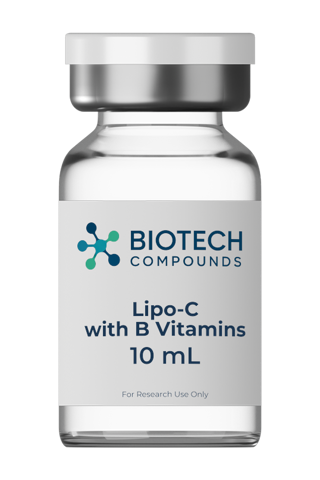
The formulation contains choline as a primary lipotropic agent, L-carnitine for fatty acid transport, and a complete B-vitamin complex including thiamine (B1), riboflavin (B2), niacin (B3), pantothenic acid (B5), pyridoxine (B6), and methylcobalamin (B12).
L-carnitine facilitates the transport of long-chain fatty acids across the inner mitochondrial membrane, where beta-oxidation occurs. Without adequate L-carnitine, fatty acids cannot efficiently enter mitochondria for energy production, limiting the body's ability to utilize stored fat as fuel.
Choline supports fat metabolism through its role in phosphatidylcholine synthesis and lipid transport.
Thiamine (B1) serves as a cofactor for pyruvate dehydrogenase and alpha-ketoglutarate dehydrogenase, crucial enzymes in glucose and fatty acid oxidation. Riboflavin (B2) forms flavin adenine dinucleotide (FAD), an essential cofactor for beta-oxidation enzymes. Niacin (B3) participates in NAD+ synthesis, supporting electron transport chain function during fat oxidation.
Pantothenic acid (B5) is incorporated into coenzyme A, which is essential for acetyl-CoA formation during fatty acid breakdown. Pyridoxine (B6) supports amino acid metabolism and helps maintain protein synthesis during periods of increased fat oxidation. Methylcobalamin (B12) participates in odd-chain fatty acid oxidation and supports cellular energy production pathways.
Muscle Preservation Mechanisms
L-carnitine plays a dual role by not only facilitating fat oxidation but also supporting muscle tissue maintenance through improved cellular energy production. Research indicates that adequate L-carnitine levels help preserve muscle protein synthesis while promoting fat utilization as the primary energy source [2].
Choline contributes to muscle preservation through its involvement in acetylcholine synthesis, which is essential for proper neuromuscular function. Additionally, choline's role in phosphatidylcholine production supports cell membrane integrity in muscle tissue. Studies have shown that choline supplementation can help maintain muscle function during periods of metabolic stress and enhanced fat oxidation.
The B-vitamin complex provides crucial support for muscle preservation through multiple pathways. Vitamin B12 supports protein synthesis and cellular division processes that are essential for muscle tissue maintenance.
The formulation appears to create metabolic conditions that favor fat oxidation while providing the necessary cofactors and substrates for muscle tissue maintenance.
Research Findings on Fat Oxidation and Body Composition
L-carnitine supplementation studies have consistently shown improvements in fat oxidation rates and reductions in body fat percentage while maintaining or increasing lean body mass [3].
A comprehensive meta-analysis of L-carnitine research found that supplementation resulted in significant decreases in body weight and fat mass compared to control groups. The analysis revealed that L-carnitine's effects were most pronounced when combined with other metabolic cofactors, suggesting potential synergistic benefits when used as part of a multi-component formulation like Lipo-C with B Vitamins.
Choline research has demonstrated its importance in lipid metabolism and body composition regulation. Studies investigating choline intake and body composition have found inverse relationships between choline levels and body fat percentage. Research participants with higher choline status showed improved fat oxidation rates and better maintenance of lean tissue during caloric restriction periods [4].
B-vitamin complex research has revealed significant impacts on metabolic efficiency and body composition. Research has shown that B-vitamin deficiencies can impair fat oxidation while promoting muscle protein breakdown, highlighting the importance of comprehensive B-vitamin supplementation for body composition goals.
Combined supplementation studies, while limited, have shown promising results for multi-component formulations similar to Lipo-C with B Vitamins.
Cellular and Molecular Mechanisms
L-carnitine influences peroxisome proliferator-activated receptor (PPAR) signaling, which regulates genes involved in fatty acid oxidation and mitochondrial biogenesis. Research has shown that L-carnitine supplementation can increase expression of genes encoding fat oxidation enzymes while supporting mitochondrial function in both muscle and liver tissue [5].
At the molecular level, choline affects methylation reactions that influence gene expression related to lipid metabolism. Choline serves as a methyl donor through its conversion to betaine, supporting DNA methylation patterns that favor fat oxidation gene expression.
Research has shown that B-vitamin adequacy is essential for maintaining optimal mitochondrial respiratory capacity and fat oxidation enzyme activity. The vitamins also support cellular antioxidant systems that protect against oxidative stress during increased fat oxidation periods.
Muscle preservation at the cellular level involves maintaining protein synthesis rates while supporting mitochondrial function in muscle tissue. The combination of L-carnitine and B-vitamins appears to create favorable conditions for muscle protein synthesis while promoting fat utilization, potentially through improved cellular energy status and enhanced amino acid utilization efficiency.
Applications in Metabolic Research
Researchers studying metabolic efficiency and body composition regulation have identified several potential applications for Lipo-C with B Vitamins in laboratory settings.
Body composition research applications include studies examining the relationship between nutrient status and lean body mass maintenance during caloric restriction or increased energy expenditure.
Metabolic pathway research has utilized similar formulations to study the interactions between lipid metabolism, amino acid utilization, and cellular energy production. The comprehensive nature of Lipo-C with B Vitamins allows researchers to examine how supporting multiple metabolic pathways simultaneously affects overall metabolic efficiency and substrate utilization patterns.
The combination of L-carnitine for fat transport, choline for neuromuscular function, and B-vitamins for energy metabolism provides researchers with a multi-faceted tool for investigating exercise-induced metabolic adaptations.
The form of choline used can influence bioavailability and effectiveness, with some studies suggesting advantages for certain choline compounds in promoting fat oxidation.
Safety Profile and Research Considerations
The safety profile of Lipo-C with B Vitamins components has been well-established through extensive research and clinical applications.
Choline safety has been thoroughly investigated, with upper intake levels established based on comprehensive toxicology studies. Research applications utilizing choline within established safety parameters have shown minimal adverse effects, making it suitable for various research protocols investigating fat metabolism and body composition.
B-vitamin safety is well-documented due to their water-soluble nature and extensive research history. However, researchers should consider potential interactions between B-vitamins and other research compounds or interventions.
The multi-component nature of the formulation requires careful attention to individual component interactions and their combined effects on metabolic parameters.
Future Research Directions
Emerging research areas for Lipo-C with B Vitamins include investigating its effects on metabolic flexibility and substrate utilization patterns under various physiological conditions.
Advanced techniques such as transcriptomics and metabolomics may reveal previously unknown mechanisms through which the formulation influences cellular metabolism and body composition outcomes.
Personalized nutrition research may investigate how genetic variations affect individual responses to Lipo-C with B Vitamins supplementation. Understanding genetic factors that influence component metabolism and effectiveness could help optimize research protocols and improve the predictability of experimental outcomes.
Conclusion
Research has demonstrated that the individual components work synergistically to support multiple metabolic pathways involved in fat oxidation, energy production, and muscle maintenance. Learn more about Lipo-C with B Vitamins research.