


Peptide manufacturing companies can serve very different needs: some make active pharmaceutical ingredients for drug development, while others produce custom research peptides or synthesis tools. Here are six named options, with a focus on what each is positioned to do and what buyers should confirm before starting a project.
An analysis of 63 YouTube comments about Peptide manufacturing companies found that 21% mentioned unreliable quality control.
1. Bachem: Dedicated peptide API manufacturing at global scale
Bachem develops and manufactures peptides and oligonucleotides as active pharmaceutical ingredients. Its work spans early clinical development through commercial GMP supply, making it a fit for pharma or biotech teams planning a drug-substance program rather than a routine lab order.
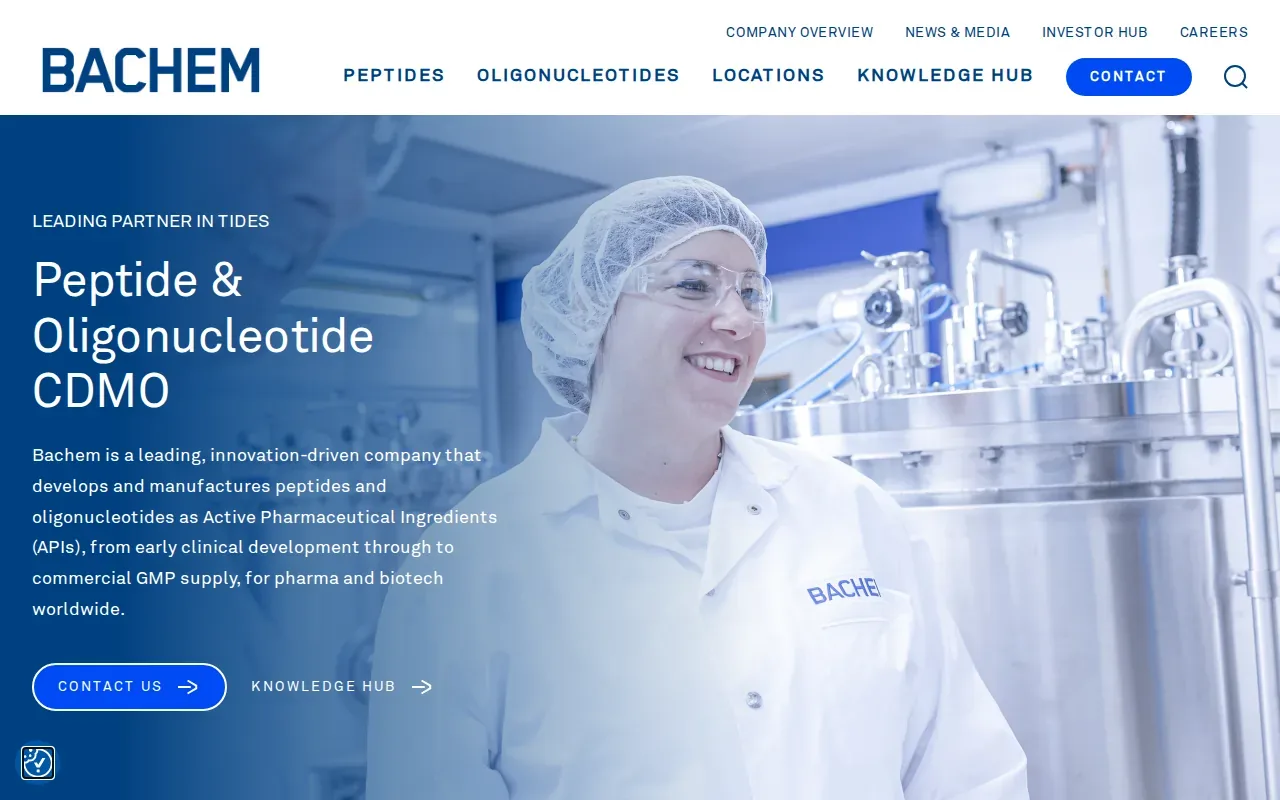
Its capabilities also include work across the supply chain, from amino acid derivatives and building blocks through large-scale API production.
Bachem says it has four sites across Switzerland and the United States. It describes production capacity from milligrams to multi-tonne commercial volumes, a range that can suit projects with very different supply needs. For a U.S. buyer, the domestic site footprint may be relevant when assessing supply planning, but the specific site and project fit should be confirmed during technical review.
The distinction between an API program and a small research purchase is important. A peptide is a chain of amino acids, as summarized in Wikipedia’s peptide definition. Manufacturing an API for a development program brings added process and quality demands beyond sourcing a research-use material for an in-vitro study.
Labs that only need research compounds may have a different purchasing path. Biotech Compounds is a U.S.-based supplier of research-grade peptides for qualified researchers, with lot-specific COAs available before shipment. Its Structural Peptides research category is one example of a research-supply catalog, not a substitute for API manufacturing.
For a project moving toward clinical or commercial supply, ask which site would handle each phase and how analytical and regulatory support fits into the proposed work.
2. PolyPeptide: Development and manufacturing for pharmaceutical APIs
PolyPeptide is a CDMO focused on developing and manufacturing peptide-based active pharmaceutical ingredients. Its stated customer base includes pharmaceutical and biotech companies, so it is best suited to teams that need a partner for a drug-development program rather than a one-off research peptide.

The company describes support across the drug's entire timeline, starting with preclinical development and continuing through clinical work and commercialization. Its activities include process and analytical method development, stability studies, API and intermediate production, plus regulatory documentation and support.
PolyPeptide reports a global network of six clinical development and commercial manufacturing sites in Europe, the United States, and India. It says the sites operate under current good manufacturing practice systems and undergo regulatory inspections and customer audits. Good manufacturing practice refers to quality controls for production and testing; Wikipedia’s overview of GMP provides a general definition, while a buyer should review the specific quality documents tied to a proposed project.
That track record may be relevant when a program involves a complex molecule or needs a partner for several development stages. The project team still needs to confirm process fit, facility assignment, batch release requirements, and the handoff between development and production.
For small labs purchasing materials for in-vitro work, a research catalog is a different channel. Biotech Compounds lists research peptides through its research peptide catalog, with lot documentation available before shipping. Keep that scope separate from a CDMO engagement, which is built around project-specific manufacturing and development work.
PolyPeptide is worth assessing when a team values continuity from early process work through later production. Before comparing proposals, define the phase of the program and the quality documentation needed at each handoff.
3. CordenPharma: Dedicated peptide manufacturing within a CDMO network
CordenPharma is a contract development and manufacturing organization with dedicated peptide manufacturing sites.
A CDMO network can matter when a project needs more than a single production task. Buyers should map the work they need, such as development, process transfer, manufacturing, and quality review, then ask which parts the proposed team will handle. CordenPharma has dedicated peptide manufacturing sites.
That makes technical qualification the useful next step. Ask the company to explain its fit for the peptide sequence, the expected scale, the development stage, and the documentation needed for release. Request a clear account of site responsibilities and how changes to the process would be managed as a project advances.
There is no sound basis to compare CDMO project pricing or timelines without a defined scope. A short peptide for early development and a commercial API program are not equivalent requests. A buyer should compare proposals using the same project brief, including scale assumptions and quality requirements.
Some organizations also need a separate source for research materials while a manufacturing program is being assessed. Biotech Compounds has a wholesale program for research-grade peptide purchasing. That may suit bulk lab sourcing, but it is distinct from contract development and GMP API production.
CordenPharma is most relevant when a project needs dedicated peptide manufacturing within a wider CDMO setting.
4. CS Bio: Custom peptide production and synthesis instrumentation
CS Bio combines custom peptide production with peptide synthesis instrumentation. That mix gives research and pharmaceutical customers two possible paths: contract production for a defined peptide, or equipment for teams that plan to synthesize material in-house.
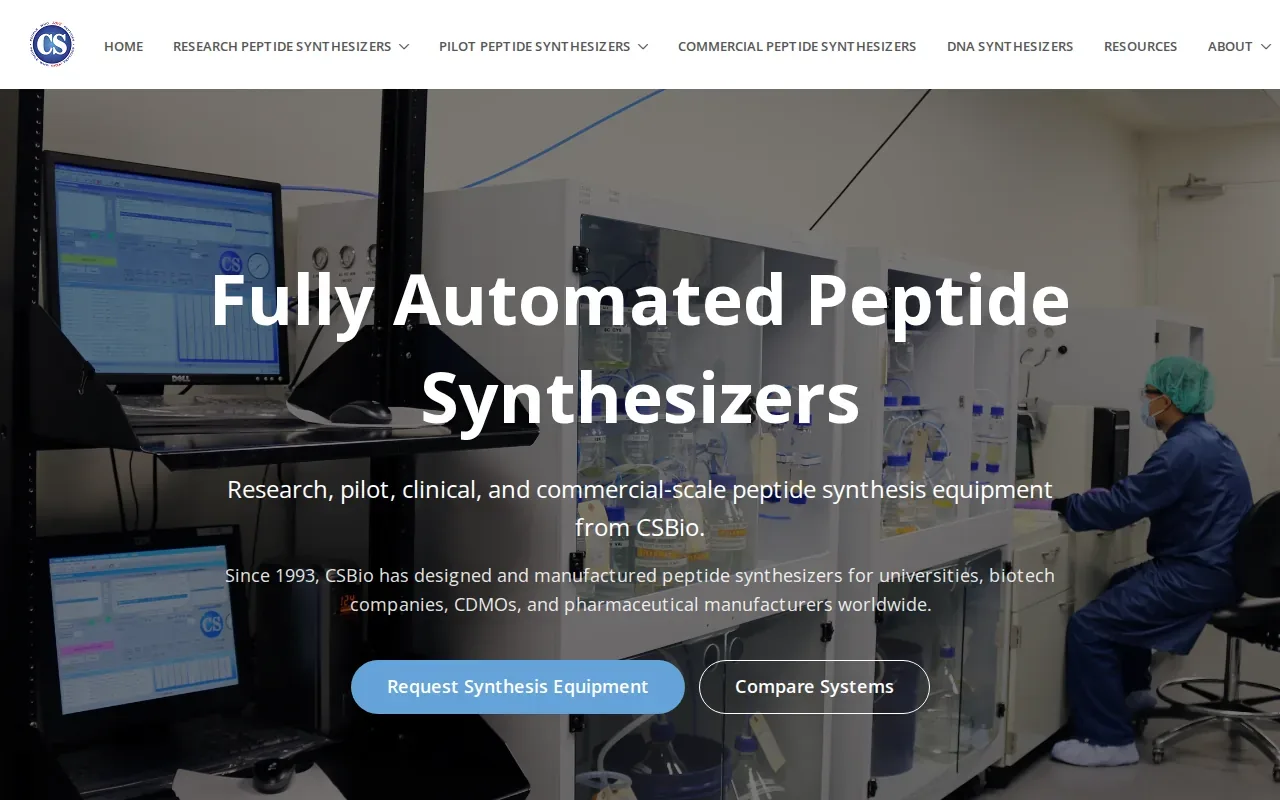
Its automated synthesizers are described for research, pilot, GMP-ready clinical, and commercial-scale work. The stated range runs from benchtop systems to 1,000-liter scale. This makes the company relevant to labs evaluating equipment alongside custom production, especially when a team wants to think through whether synthesis should stay external or move into its own facility.
Those are separate buying decisions. Custom production means a supplier makes a specified peptide for the customer. Buying an instrument also means the lab must assess staffing, process control, maintenance, and its own quality system. The choice between outsourced production and in-house equipment depends on the team’s capacity and the role synthesis will play in its research or manufacturing plan.
For custom work, define the sequence and required scale before requesting a quote. For equipment, ask how the system fits the intended stage of work and what support comes with the instrument. CS Bio offers systems across several scale categories, but the buyer should match exact requirements with the supplier rather than assume every system suits every project.
Research supply remains a distinct need for labs that do not plan to synthesize compounds themselves. Biotech Compounds organizes its catalog by research area, including antimicrobial peptides for laboratory research. Its products are for in-vitro research only and are not for human or veterinary consumption.
CS Bio is a useful option to assess when the choice between outsourced synthesis and in-house equipment is still open.
5. AAPPTec: Peptide synthesis reagents, resins, and custom manufacturing
AAPPTec supplies peptide synthesis reagents and resins, and it also provides custom peptide manufacturing. It may suit laboratory and industrial buyers who need synthesis inputs or want to source custom production from the same company.
The two service areas support different workflows. Reagents and resins are inputs for a lab that performs peptide synthesis itself. Custom manufacturing is a route for buyers who need a supplier to produce a specified peptide.
For reagent sourcing, match the requested material to the lab’s existing process and purchasing standards. For a custom order, share the project specification and ask how the supplier will confirm the agreed scope. Those questions help keep a reagent purchase distinct from a custom manufacturing request.
Buyers comparing a manufacturer with a research supplier should also separate intended use. Biotech Compounds supplies lyophilized research-grade peptides for laboratory research only.
AAPPTec is worth considering when a lab needs peptide synthesis inputs or custom production. The deciding factor is the work the lab expects the supplier to perform, not the broad label “peptide company.”
6. Hybio: A peptide manufacturer to assess against project requirements
Hybio is a peptide manufacturer to assess against the needs of a specific project. The available company material describes peptide drug manufacturing and says the company received an FDA notice accepting an Investigational New Drug application. Acceptance of an application is a step in a regulatory process; it is not the same as authorization to market a product.
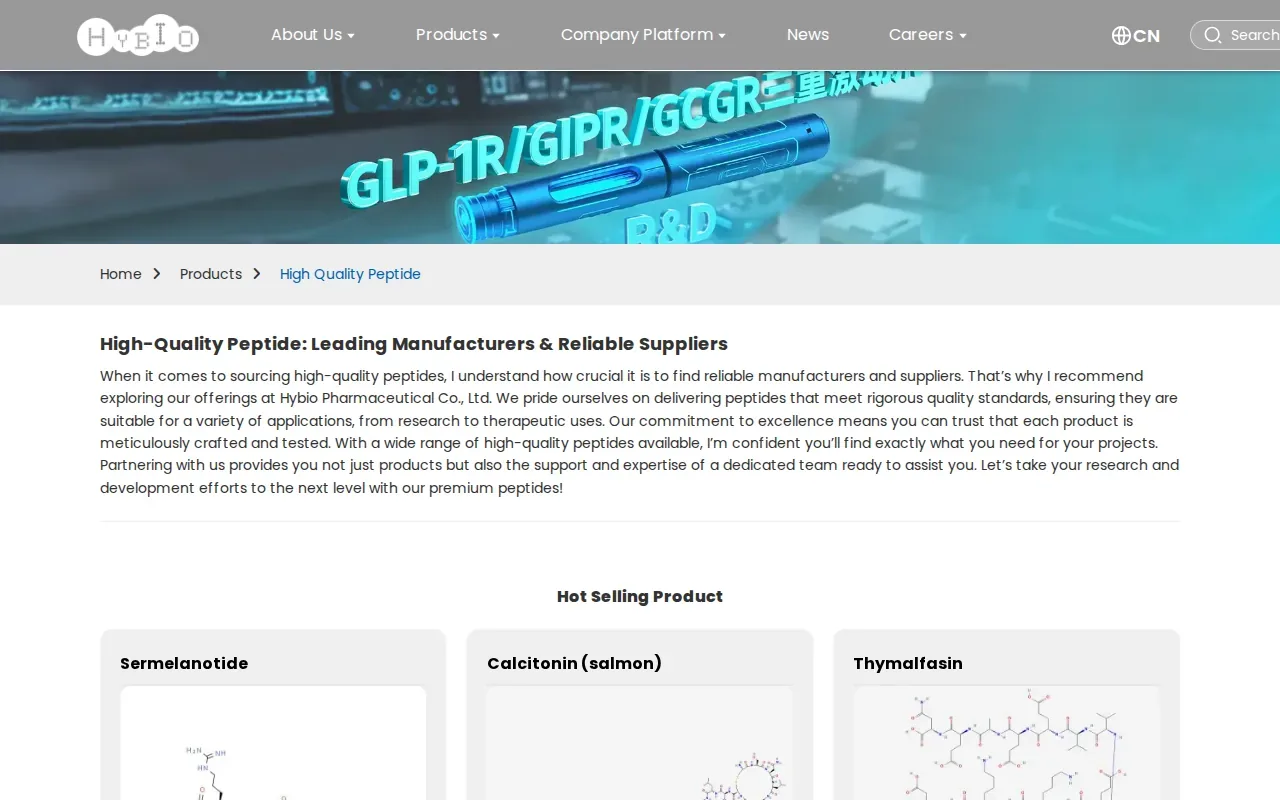
For a U.S. program, ask which site would make the material and which quality and regulatory documents apply to that site and product.
Hybio’s listed details do not, on their own, establish the fit for a particular sequence, scale, or development phase. A technical discussion should pin down the project’s requirements and the documents the buyer needs to review.
| Project question | Why it helps assess fit | What to confirm |
|---|---|---|
| Is the project for drug development or lab research? | These needs use different supply and quality paths. | Intended use and project stage |
| Which site will handle the work? | Site assignment shapes the project handoff. | Facility and site-specific quality records |
| What scale is required? | Scale affects process planning and production fit. | Target quantity and scale-up needs |
| What documents are needed? | Quality review depends on the records required by the buyer. | Release records and regulatory support |
For labs sourcing research materials rather than contracting for drug development, Biotech Compounds states that it uses third-party HPLC testing and publishes a lot COA before shipment. Its research peptide information should be considered within that research-use-only scope.
Hybio belongs in a project review when its manufacturing and regulatory experience appears relevant, but qualify the exact work, site, and records before making a supplier decision.
Frequently Asked Questions
What do peptide manufacturing companies make?
Peptide manufacturers may make active pharmaceutical ingredients, custom peptides, or materials for research, depending on the company’s focus. A CDMO may support development and production for a drug program. A research supplier may sell defined research-grade materials to laboratories. Buyers should confirm the intended use and manufacturing scope before comparing providers.
What is the difference between a peptide manufacturer and a peptide supplier?
A peptide manufacturer produces peptides or related materials, often for a customer’s defined project. A supplier may sell finished research materials from a catalog. Some businesses do both. The distinction affects what a buyer should check, since a research catalog order is different from a development or contract manufacturing engagement.
What quality documents should a buyer ask for?
Ask for documents that match the project and intended use, such as the relevant batch or release records and the supplier’s quality information. For research materials, a lot-specific Certificate of Analysis can help a lab review the material received. Confirm what each test covers and whether the document applies to the lot being purchased.
Can research-grade peptides replace GMP manufacturing?
No. Research-grade materials for laboratory work are not a replacement for GMP manufacturing in a drug-development program. The two supply paths have different purposes and quality requirements. Biotech Compounds labels its products for in-vitro laboratory research only, not for human or veterinary consumption.
Conclusion
Choose the provider whose stated work matches the project: API development, custom production, synthesis equipment, or research supply. For in-vitro research purchasing, review Biotech Compounds' catalog and lot documentation before placing an order. For research use only. Not for human or veterinary consumption. These statements have not been evaluated by the FDA.