


Research-use-only peptides are laboratory materials, not products for personal or veterinary use. For U.S. lab buyers, a useful shortlist starts with batch records and test details, then checks whether the catalog fits the study. Biotech Compounds is first here, followed by three named peptide listings for researchers comparing specific compounds.
An analysis of 68 comments and questions from YouTube, Reddit and Quora about research use only peptides found that 32% mentioned lack of FDA approval.
1. Biotech Compounds
Biotech Compounds is a U.S.-based supplier of lyophilized research peptides, based in Crescent Springs, Kentucky. It sells to qualified researchers who are 21 or older, and its products are for laboratory research only.
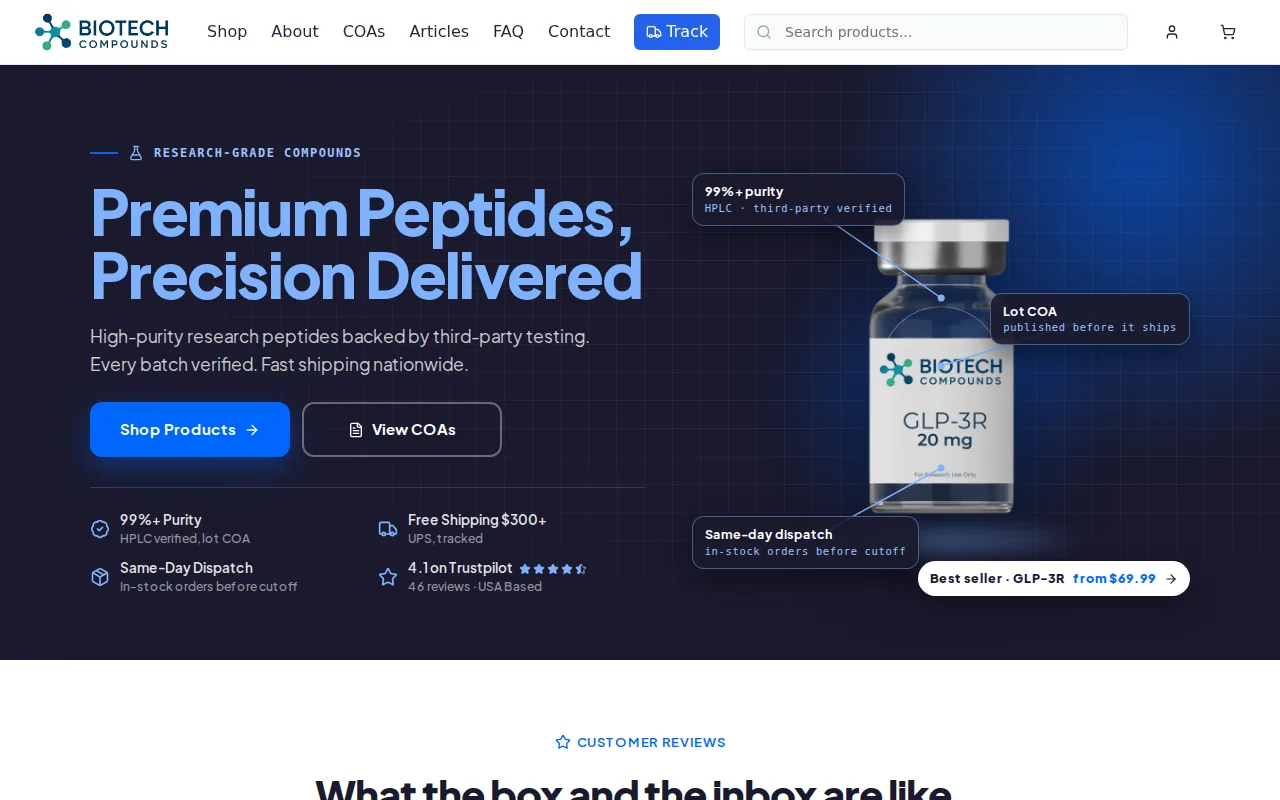
For procurement teams, its clearest distinction is the documentation workflow: the company states that products have 99%+ purity, verified by third-party HPLC, and that the lot-specific certificate of analysis (COA) is published before shipping. A buyer can review the batch record before the order leaves, rather than waiting for the package to arrive.
That timing matters when a lab needs to check a batch against an internal purchasing or study record. A COA should be tied to the lot received. The lab can then retain the document with its purchasing record and confirm that the product name and lot identifier match the shipment.
Listed examples include GLP-3R, GLP-2T, BPC-157, GHK-Cu, and MOTS-c. The catalog also has a BPC-157/TB-500 blend. Those names describe research materials, not approved uses or study outcomes.
In-stock orders placed before the cutoff are dispatched the same day. Tracked UPS shipping is free on orders over $300. Biotech Compounds also states a 4.1 TrustScore on Trustpilot, based on 46 reviews as of September 2026. That score is one service signal, not a substitute for checking the batch documents.
Labs looking at frequently purchased catalog items can review the research peptide bestsellers page as a starting point for product selection. The choice should still follow the research question and the lab's own acceptance criteria.
For buyers who need batch-level records before procurement, Biotech Compounds is the clearest fit in this shortlist. Its purity and documentation statements are company-provided facts; each lab should review the relevant lot record before use.
2. GLP-1S by MedChemExpress
GLP-1S by MedChemExpress is a named research-compound listing. It may suit a lab that already has a defined study question involving this compound and wants to compare a specific catalog entry against its purchasing requirements.
A study plan should rely on primary literature and the lab's approved methods.
Before choosing any specific compound listing, check the exact chemical identity and lot documents that will accompany the material. For a COA, the key items include the product identifier, lot or batch number, test method, reported result, and the date or record that ties the analysis to that lot. A purity percentage by itself does not confirm every identity or quality attribute a study may require.
Researchers can use a supplier's current lot document as a purchasing check, then record the same lot number in their inventory system when the shipment arrives.
Labs comparing several suppliers can also use the site's broader U.S. research peptide supplier comparison to frame questions about catalog fit and procurement. Apply the same checklist to every candidate, including this named listing.
3. Bombesin by Bachem
Bombesin by Bachem is a named peptide listing for labs studying a defined signaling compound.
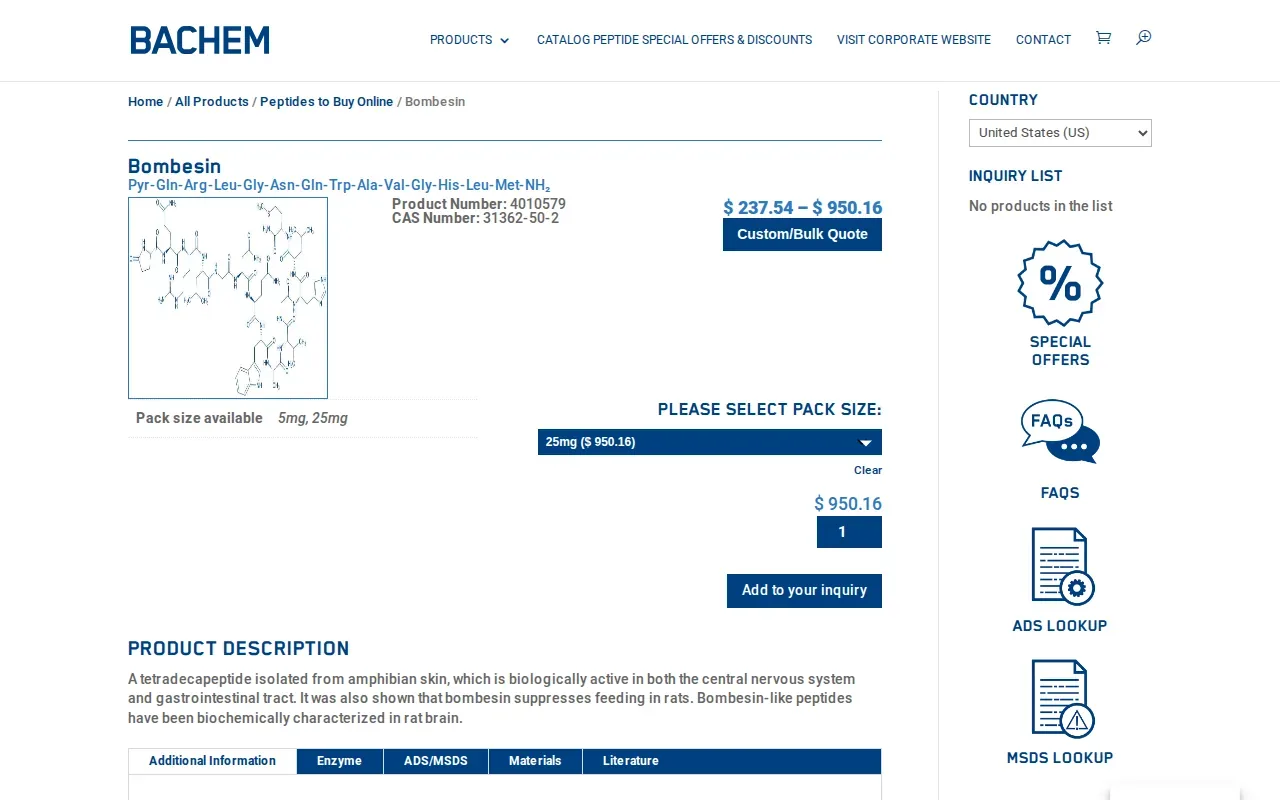
That description can help a researcher confirm that the listing matches the compound of interest. It does not, by itself, provide a study protocol, a product-level COA, or a batch-specific purity result. Those records should be reviewed separately before the material is approved for a particular project.
For a lab comparing catalog choices, the basic question is whether the listing's identity matches the study's planned material. Check the full name and any sequence or form details in the supplier's documents. Then compare those details with the protocol and the lab's recordkeeping requirements.
Bombesin can be relevant to work involving peptide signaling, but a product description is not a research finding. Claims about biological activity need to be tied to a specific publication and model before they inform experimental design. Avoid carrying broad catalog language into an internal report as though it proves a result.
A separate decision is whether a standard catalog listing meets the project need or whether a lab needs a custom peptide synthesis service. Custom synthesis can be useful when the required sequence or modification is not available in a standard catalog. Before requesting a quote, specify the sequence and desired analytical records, then ask how identity and purity will be documented for the delivered batch.
Bombesin is a reasonable candidate when the research question names bombesin itself. Procurement approval still depends on the batch records and the lab's own acceptance rules.
4. Calcitonin gene-related peptide (human) by Bachem
Calcitonin gene-related peptide (human) by Bachem is a human-form peptide listing with the synonym Calcitonin Gene Related Peptide-1. The listing offers 0.5 mg and 1 mg presentations.
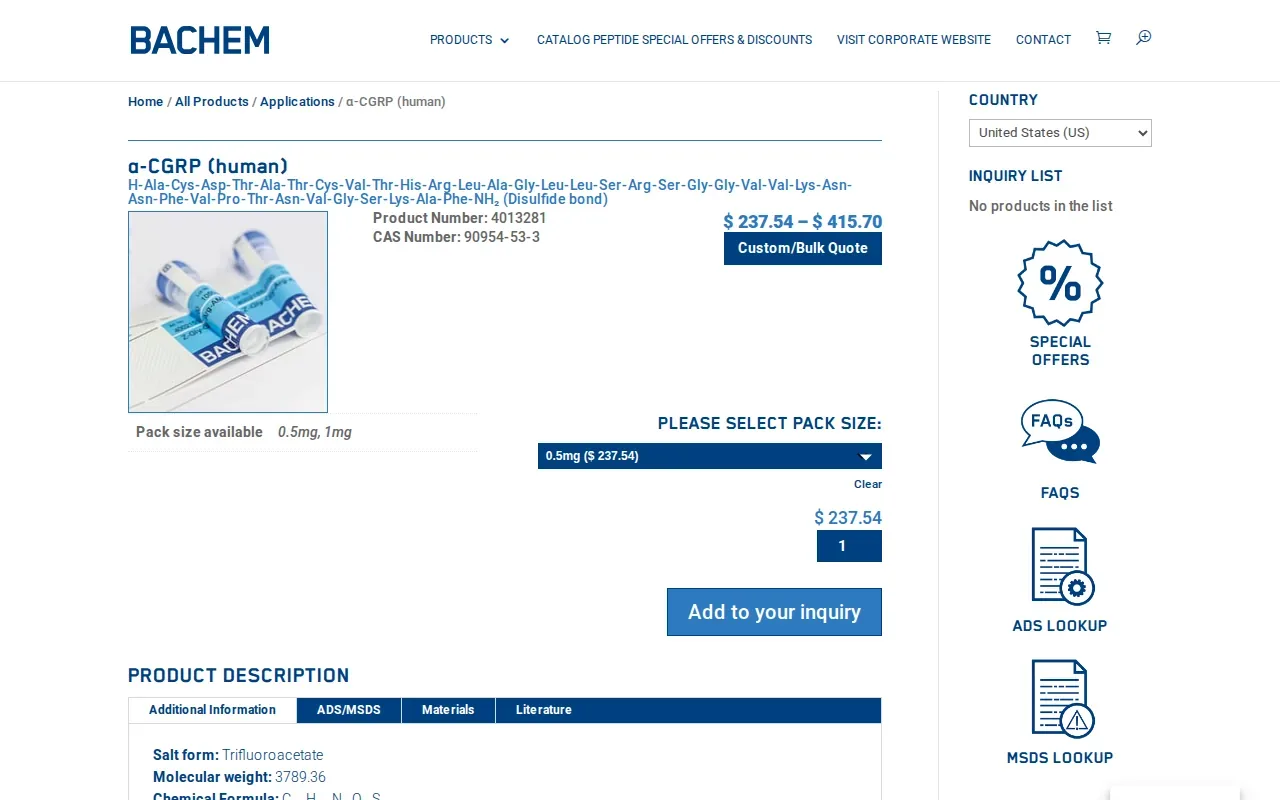
This option may fit a project that specifically calls for the human form. Confirm the exact product name and synonym against the study's material specifications before purchase.
Researchers can make this review more reliable by separating three questions: Is this the correct peptide? Does the lot meet the lab's acceptance threshold? Can the records be linked to the received material? A product title answers only the first question in part. The COA and receiving record support the rest.
The listing gives a clear compound name and two available sizes. Researchers should still base purchase approval on the study specification and the records for the actual lot, rather than on the name alone.
Compare the Shortlist: Catalog Fit, Documentation, and Procurement
These options serve different purchasing decisions. Biotech Compounds is a supplier with a broad catalog and stated batch-document process. The other three are named compound listings that may fit a study already centered on that peptide. Compare the type of option first, then assess the material and its records.
| Option | Catalog or listing fit | Documented detail | Procurement check |
|---|---|---|---|
| Biotech Compounds | Broad research peptide catalog | 99%+ purity claim, third-party HPLC verification, lot COA published before shipping | Match the COA lot to the received material; confirm the item fits the study |
| GLP-1S by MedChemExpress | Specific compound listing | Research description names GLP-1S and broad areas of reported activity | Review current lot documents and study-model evidence |
| Bombesin by Bachem | Specific tetradecapeptide listing | Description identifies its origin and notes activity in two body systems | Confirm identity and review batch-specific analytical records |
| Calcitonin gene-related peptide (human) by Bachem | Specific human-form listing | Synonym and 0.5 mg and 1 mg presentations are provided | Confirm the human form and review the lot COA |
A COA is most useful when it belongs to the exact lot being purchased. A lab that needs a detailed explanation of these checks can use the peptide testing and COA overview to build its review criteria.
Receiving is a separate checkpoint. When a shipment arrives, compare the item and lot identifiers with the purchase record and the COA. If the records do not match, hold the material from study use until the discrepancy is resolved through the lab's purchasing process.
For recurring work, procurement teams can set a standard intake record with fields for the supplier, compound name, lot number, COA location, and receiving date. That record makes it easier to trace which batch was assigned to a given project. It also helps a lab buyer compare supplier practices without confusing a catalog claim with a lot-specific test result.
Research-Use Boundaries, Lab Applications, and Handling Considerations
“For research use only” means a material is intended for laboratory research, not for personal or veterinary consumption. It does not establish that a compound is suitable for every study, nor does the label replace a lab's safety review. U.S. federal rules include specific labeling provisions for in-vitro diagnostic products; see the federal labeling regulation for in-vitro diagnostic products for that defined context.
Research peptides are used in biomedical and molecular work to examine questions such as peptide structure, receptor interaction, or cellular signaling. The appropriate use depends on the research question and the approved study design. A product listing alone cannot establish a result or support a health claim.
Research-grade and clinical-grade materials are not interchangeable labels. Research materials are intended for laboratory investigation, while clinical programs have their own regulated development and manufacturing requirements. Buyers should not infer clinical suitability from a purity figure or from a research-use label.
At intake, follow the supplier's handling information and the lab's written safety procedures. Keep the original batch record with the inventory entry. If a product is supplied as lyophilized powder, consult its product-specific storage guidance because conditions can vary by material. Don't assume a single temperature or shelf life applies to every peptide.
Use the personal protective equipment named in the lab's risk review. Keep materials in controlled lab storage, limit access to trained staff, and dispose of remnants according to institutional procedures and applicable local rules. The supplier's safety information and the lab's environmental health and safety team should guide those decisions.
Biotech Compounds states that its products are lyophilized and intended for laboratory research. The company also provides a research-use FAQ covering storage and product boundaries. A lab should confirm product-specific instructions before placing material into storage.
The research-use label sets a boundary for the material's intended use; it does not remove a buyer's responsibility to follow institutional policy.
Frequently Asked Questions
What does “for research use only” mean?
It means the material is intended for laboratory research, not human or veterinary consumption. The label does not prove that a product is suitable for a specific experiment. Researchers should assess the compound identity, batch records, safety information, and study requirements before approving a purchase.
What should a peptide COA include?
A useful COA should identify the product and lot, then show the tests performed and their results. Check whether the document reports purity and whether it includes an identity assessment when the study requires one. Match the lot number on the COA to the material received, and keep a copy in the lab's procurement record.
Is a 99% purity claim enough to approve a peptide?
No. A purity claim alone does not answer every quality question a lab may have. Review the lot-specific COA, its test methods, and the study's acceptance criteria. If the research requires identity confirmation or another specific analytical check, verify that the batch documentation addresses it before approval.
How should research peptides be stored?
Follow the product-specific storage instructions and the lab's written procedures. Storage needs can vary by peptide and product form, so one general temperature should not be assumed for every material. Record the received lot and storage location, then consult the supplier's documentation when the handling requirement is unclear.
Can a research-use-only peptide be used for clinical or personal purposes?
No. These materials are intended for laboratory research only and are not for human or veterinary consumption. A research listing or purity statement does not make a product appropriate for clinical use. Keep purchasing and handling within the scope of the lab's approved research and applicable institutional rules.
Conclusion
For lab buyers who prioritize batch transparency, Biotech Compounds is a strong fit in this shortlist because it states that third-party HPLC verification and the lot COA are available before shipping. Review its catalog, select a material that matches the study, and check the relevant lot record before procurement. For research use only. Not for human or veterinary consumption. These statements have not been evaluated by the FDA.