


Buying in bulk puts more weight on each supplier’s testing records and shipping terms. This shortlist of wholesale research peptides suppliers starts with Biotech Compounds, then compares two other named options using the facts available to lab buyers.
An analysis of 45 YouTube comments about wholesale research peptides found that 22% mentioned purity testing and COA verification.
1. Biotech Compounds
Biotech Compounds is a U.S.-based supplier of research-grade peptides in lyophilized powder form. It serves qualified researchers aged 21 and older, including labs that need bulk or white-label supply. Products are for in-vitro laboratory research only, not human or veterinary use.
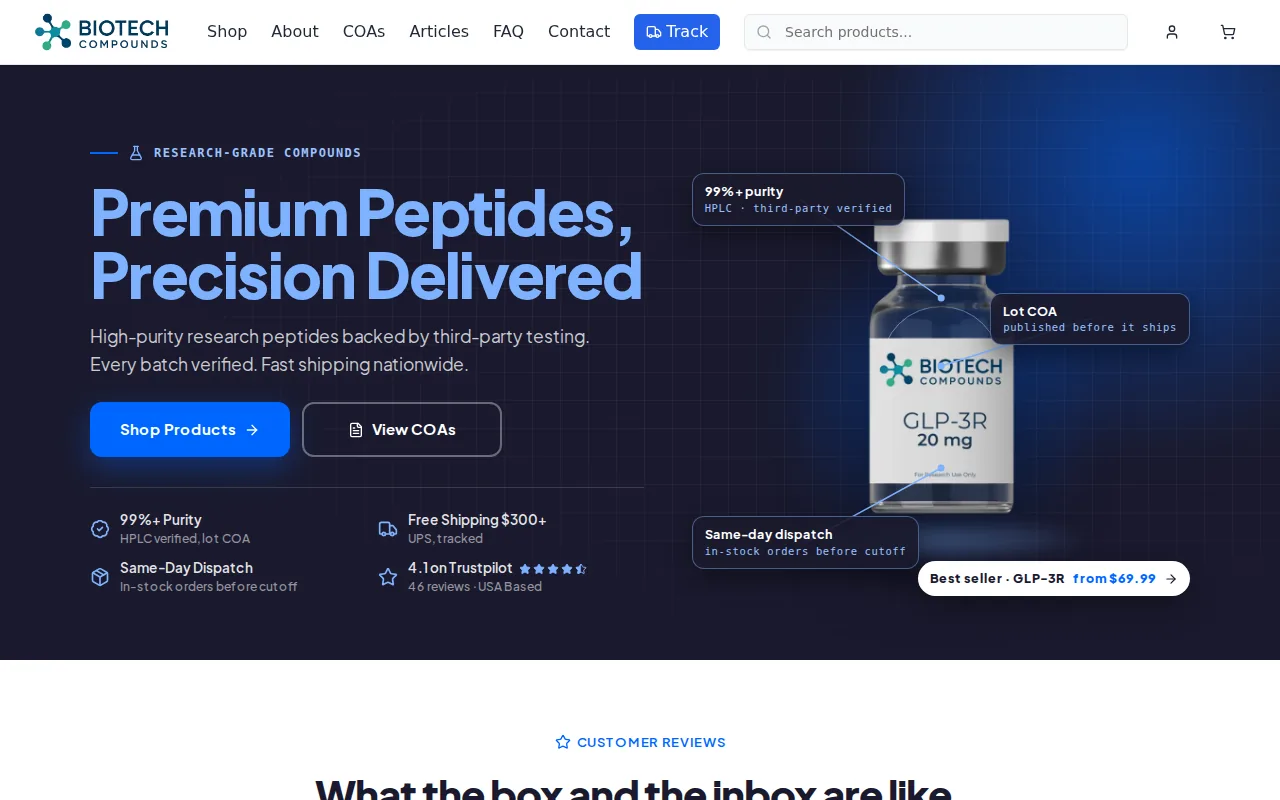
The company states that its peptides have 99%+ purity verified by third-party HPLC testing. A lot-specific certificate of analysis is published before shipping. That gives procurement staff a document to match against the received lot, rather than relying only on a general purity statement.
Its catalog spans research categories such as hormonal, structural, neurotransmitter, inhibitory, and antimicrobial peptides. Buyers can review available compounds through the research peptide catalog and confirm that a listed material fits the lab’s planned in-vitro work.
For in-stock orders placed before the cutoff, Biotech Compounds states that it dispatches the same day. Tracked UPS shipping is free on orders over $300. Its listed TrustScore is 4.1 on Trustpilot, based on 46 reviews as of September 2026. These are useful operational details, though they don’t replace review of the lot COA or the lab’s own quality checks.
Wholesale and white-label options make the supplier relevant to buyers who need repeat purchasing or larger quantities. Ask for the terms that apply to the specific order, including any minimum quantity and how lot documentation will be handled across a multi-lot shipment.
For a broader supplier comparison, Biotech Compounds also has a roundup of U.S. research peptide suppliers and their quality checks. Use it as a starting point, then verify the paperwork and terms for the order in front of you.
2. IRON Peptides: HPLC and mass spectrometry documentation
IRON Peptides states a purity of at least 99%.
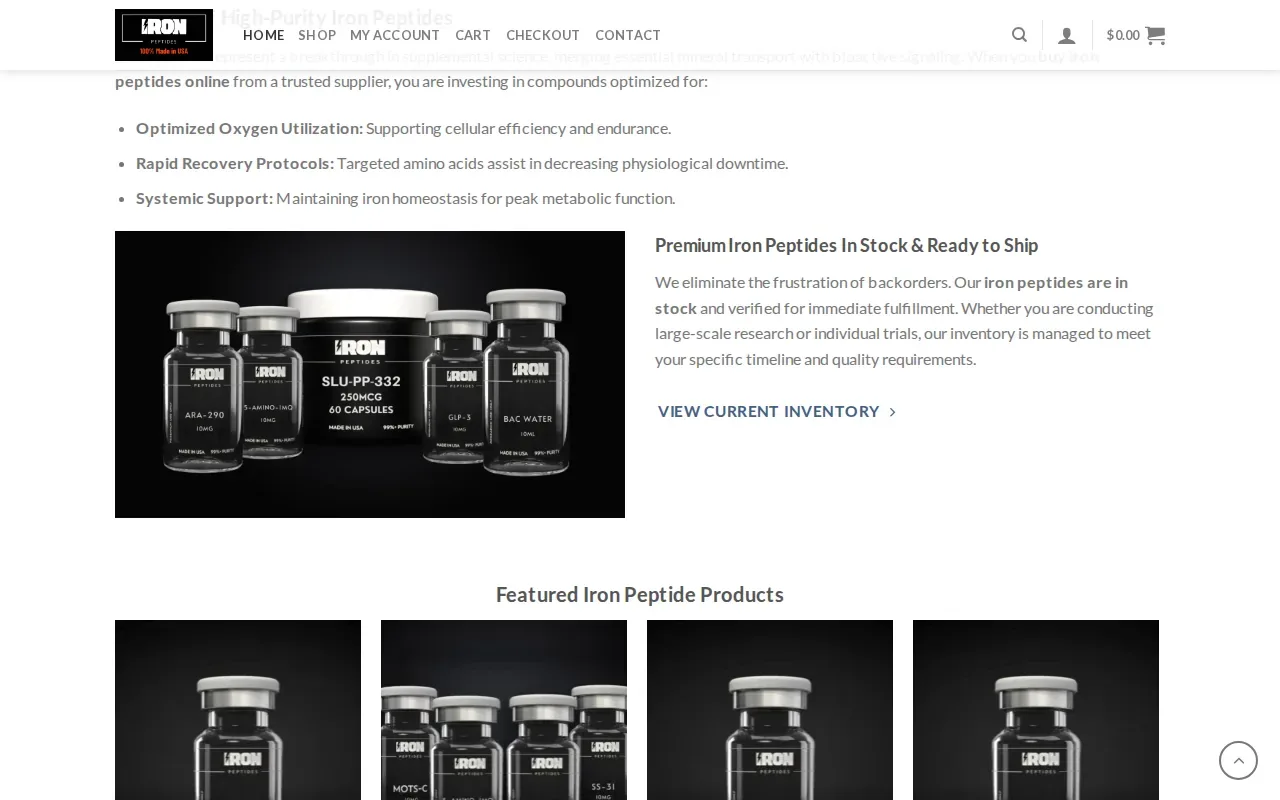
IRON Peptides also makes its COAs public. That can help a buyer review documentation before placing an order, then compare the document with the lot received. For routine purchasing, the key check is whether the report clearly identifies the material and the batch being supplied.
A stated purity percentage is only one part of a purchasing review. Ask whether the available COA is lot-specific, check which tests it reports, and keep a copy with the lab’s procurement record. A method name alone doesn’t answer every question about identity or the details of a given lot.
Wholesale buyers should also confirm the terms that shape the final order. These may include the quantity needed to access bulk pricing, the lead time for the requested quantity, and how the supplier handles shipments that include more than one lot. Confirm those points directly before building a repeat order around them.
IRON Peptides may suit a buyer whose first screen is the presence of public COAs and named analytical methods. The next step is to assess the actual report and order terms against the lab’s requirements.
3. Integrative Peptides: a supplier to assess against lab requirements
Integrative Peptides describes a professional partner program for qualified accounts. The company also describes pricing intended to support recurring supply.
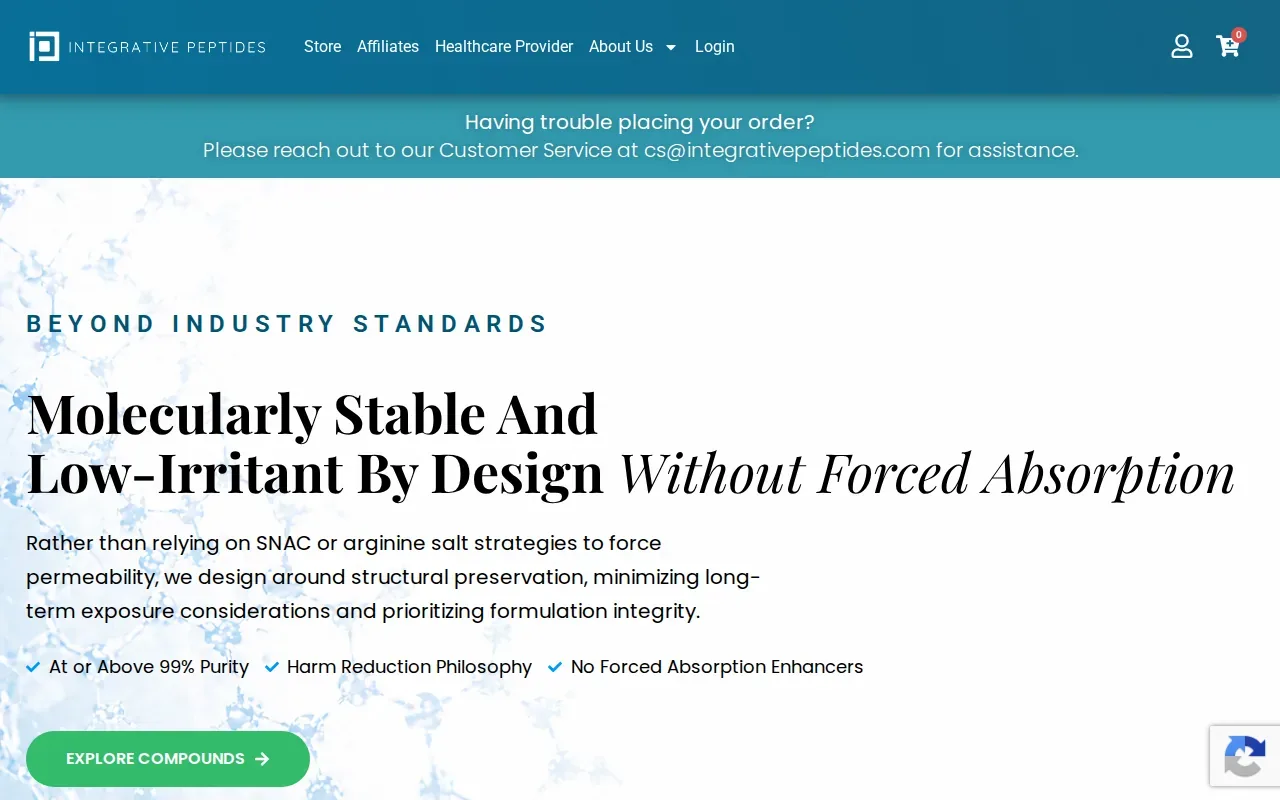
Its account process asks applicants for business details and professional credentials, or a reseller’s license. A sales tax exemption certificate may also apply. Approved accounts can access partner pricing.
Integrative Peptides states that qualified accounts may receive discounts off standard pricing. A percentage discount alone doesn’t show the total cost of a recurring purchase, so compare the final quote and terms.
The supplier also describes acetylated and amidated peptide structures. These modifications can matter when a project specifies a particular structure. Confirm the exact material and its corresponding batch documentation before including it in a study plan.
This option is worth assessing when professional account access or modified structures are relevant to the lab. Check that its available documentation and supply terms meet the same internal standards used for other vendors.
Wholesale buyer checklist: pricing, documentation, shipping, and compliance
Wholesale pricing can use quantity breaks, account-based rates, or a quote for recurring orders. The details vary, so ask what quantity triggers each rate and whether the terms apply to a single compound or a mixed order. Biotech Compounds describes wholesale and white-label options through its wholesale program.
Compare the full order cost, not just the per-unit figure. Include any minimum order, shipping charge, and the time needed to approve a qualified account. For ongoing work, a consistent quote format makes it easier for procurement to compare a repeat order with the last one.
Before purchase, ask for the COA tied to the lot being shipped. Check the material name and lot identifier, then save the report with the purchase record. If third-party testing is part of your requirement, verify that the documentation identifies the test method and the tested batch.
Shipping speed and temperature handling are separate questions. Confirm the dispatch window, carrier service, tracking process, and any temperature controls that the supplier recommends or uses. Don’t assume a cold-chain service is included unless the supplier confirms it for that shipment.
For a quick check on the supplier’s U.S. business details and stated research-use terms, review Biotech Compounds’ company and research-use information. Keep this separate from the actual product and lot records, which should be reviewed for each purchase.
In the United States, research-use wording doesn’t settle every compliance question by itself. The FDA’s guidance on products labeled for research or investigational use addresses distribution of in-vitro diagnostic products.
For regulatory questions, review the linked regulatory resource and check with the institution’s compliance staff before ordering.
FAQ
What should a wholesale peptide COA show?
A useful COA should identify the material and connect the results to a specific lot. Check which tests and methods the report names, then compare its lot identifier with the shipment record. If your lab requires third-party testing, confirm that the document supports that requirement. Keep the report with the purchase records so it’s available during internal review.
Does a 99% purity claim establish whether a peptide matches a study’s specifications?
No. A purity percentage is one quality detail, not a full match to a study’s specifications. Review the lot-specific report and confirm the material identity and the testing details your lab requires. The form and any structural changes should match the study plan. A supplier’s general claim shouldn’t replace review of the actual documentation.
What should labs ask about bulk shipping?
Ask when the order will dispatch, which carrier service applies, how tracking is provided, and what handling conditions the supplier recommends. If your lab requires temperature-controlled delivery, get confirmation for the actual shipment before ordering. Also check how the supplier handles multiple lots in one order, since each lot may need its own documentation.
Are research-use-only peptides approved for human or veterinary use?
No. The materials discussed here are designated for laboratory research only and are not for human or veterinary use. An RUO label does not establish that a material is suitable for every research setting or resolve a lab’s compliance duties. Buyers should follow institutional policies and consult qualified compliance staff when intended use is uncertain.
Conclusion
For labs that prioritize public, lot-specific documentation alongside stated third-party HPLC testing, Biotech Compounds is a strong fit in this shortlist. Review its wholesale terms and the relevant lot COA before placing an order. For research use only. Not for human or veterinary consumption. These statements have not been evaluated by the FDA.